
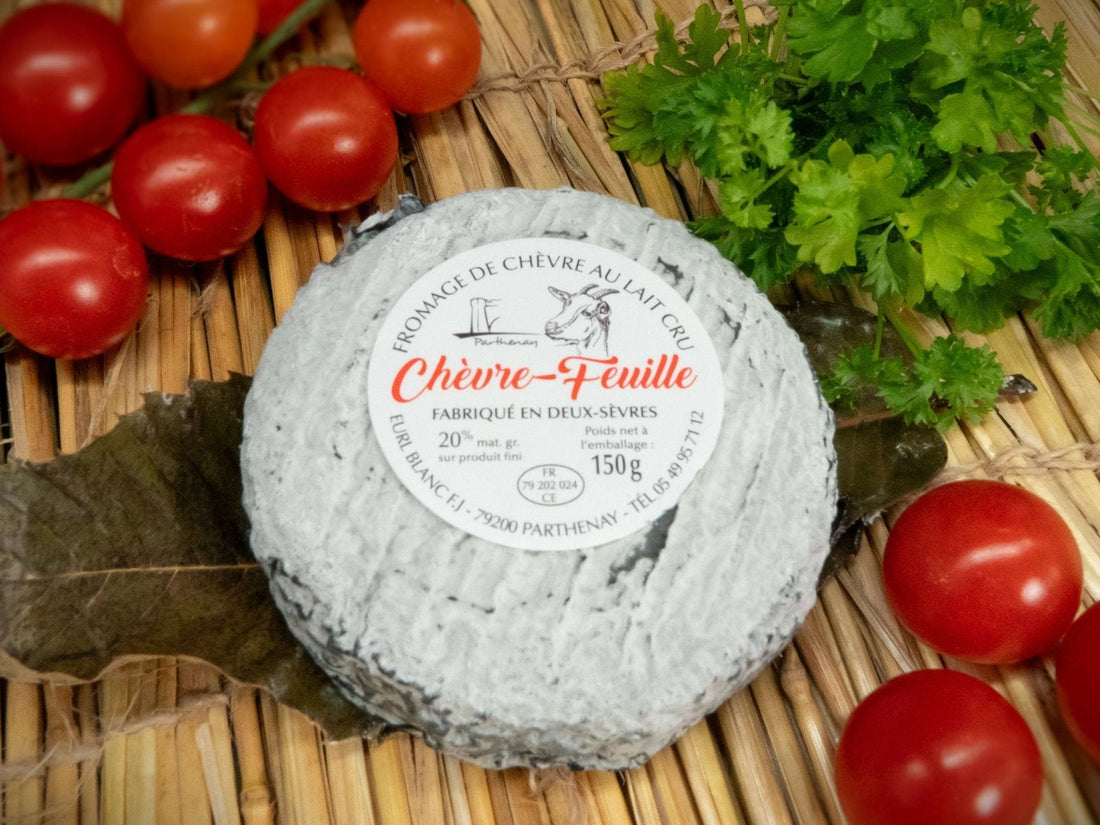
- A goat's cheese is made exclusively from goat's milk. Its goaty flavour comes from fatty acids naturally present in this milk.
- There are three main shapes: the crottin (small, cylindrical), the bûche (a log, easy to slice) and the pyramid (ash-coated, emblematic of the Berry).
- Fresh, it is mild and creamy. Matured, it becomes firm and intense, with notes of hazelnut.
- Raw milk preserves the milk's natural flora: the flavour is more complex, the terroir better expressed.
- The classic pairing: a semi-dry goat's cheese with a mineral white from the Loire, such as Sancerre or Pouilly-Fumé.
What is goat's cheese?
A goat's cheese is a cheese made by transforming goat's milk. Simple in its definition. Remarkable in its nuances.
What sets it apart straight away is its natural acidity. Goat's milk contains medium-chain fatty acids (caproic, caprylic and capric acid) that give it that unmistakable goaty taste. The texture is lighter than a cow's milk cheese. The paste is often whiter, almost pearly.
The microbial flora plays a central role. It varies with the terroir, the season, the breed of goat and the farming practices. It is what gives each cheese its own character.
Raw milk or pasteurised milk? That is the question that changes everything. Pasteurised milk is heated to eliminate bacteria. It gives a consistent, stable, milder cheese. Raw milk goat's cheese keeps its natural flora intact. The flavour is livelier, more complex. The terroir comes through fully in every bite. Almost all French AOP cheeses are made from raw milk, and that is no coincidence.
The main shapes of goat's cheese
The shape of a goat's cheese is not just a matter of looks. It determines the maturing, the texture and how it is used in cooking.
| Shape | Characteristics | AOP examples |
|---|---|---|
| Crottin | Small, cylindrical, 60–80 g. Matures quickly. Fresh to very dry depending on age. | Crottin de Chavignol AOP |
| Goat's cheese log (bûche) | Elongated format, easy to slice. Often ash-coated. Versatile in cooking. | Sainte-Maure-de-Touraine AOP |
| Pyramid | Distinctive truncated shape. Blue-grey ash-coated rind. Creamy paste under the rind. | Valençay AOP, Pouligny-Saint-Pierre AOP |
| Goat's milk tomme | Larger format, long maturing, firm to crumbly paste. Pronounced flavour. | Chevrotin AOP, Charolais AOP |
| Fresh spreadable | No rind, creamy texture, mild and milky flavour. Ideal for beginners. | — |
A practical tip: size gives an indication of how fast a cheese matures. Small formats, such as crottins and palets, mature faster. A log or a tomme needs more time to reveal its full character. Discover our selection in the goat's cheese collection.

Fresh, semi-dry, dry: understanding maturing
Maturing is the cheese's journey. From pristine white to golden brown, each stage tells a different story.
| Stage | Duration | Appearance | Flavour | Best use |
|---|---|---|---|---|
| Fresh | 0–10 days | White, moist, no rind | Mild, tangy, milky | For spreading, in salads, with honey |
| Semi-dry | 2–4 weeks | Thin rind, firmer paste | Distinctly goaty, slightly salty | Cheese platter, cooking (warm goat's cheese, tart) |
| Dry / matured | 1–3 months and more | Hard rind, crumbly paste | Pronounced, hazelnut notes, sometimes sharp | Shaved, grated, on a cheese platter with character |
Fresh goat's cheese is an ideal way in. It is mild, reassuring, approachable. Matured goat's cheese is for enthusiasts looking for character. In between, the semi-dry offers a perfect balance: texture and flavour, without excess.
A very well-matured dry goat's cheese can break into layers, almost like slate. It is a sign of long maturing, and of concentrated flavours.
Raw milk goat's cheese: why it changes everything
Raw milk is not a detail. It is a philosophy.
When milk is not pasteurised, its natural flora remains intact. These bacteria, yeasts and moulds, specific to each farm, are at work during maturing. They break proteins and fats down into aromatic molecules. They give the cheese a complexity that pasteurised milk cannot reproduce.
The result? A raw milk goat's cheese with a livelier, more nuanced flavour. A more expressive texture. A direct link with the terroir it comes from.
The great French AOP goat's cheeses are almost all made from raw milk, according to the specifications approved by the INAO:
- Crottin de Chavignol AOP — Berry, Loire
- Valençay AOP — Berry, ash-coated pyramid
- Pouligny-Saint-Pierre AOP — Berry, tall slender pyramid
- Selles-sur-Cher AOP — Centre-Val de Loire, ash-coated
- Sainte-Maure-de-Touraine AOP — Touraine, ash-coated log
- Chabichou du Poitou AOP — Poitou, shaped like a bung
- Banon AOP — Alpes-de-Haute-Provence, wrapped in leaves
- Picodon AOP — Drôme and Ardèche
- Pélardon AOP — Languedoc
- Rocamadour AOP — Lot, small melting disc
- Chevrotin AOP — Savoie, pressed cheese
- Charolais AOP — Saône-et-Loire
- Mothais sur feuille AOP — Poitou
Storage: raw milk cheese is more delicate than pasteurised cheese. Once opened, keep it in greaseproof paper or in its original box, at the bottom of the fridge. Eat it within 3 to 5 days, or as stated on the label, to enjoy all its qualities.
Ash-coated goat's cheeses: a French tradition
The blue-grey rind of an ash-coated cheese never fails to catch the eye. It is the sign of an age-old technique.
The ash used is vegetable charcoal, traditionally powdered beech. Its role is twofold. It regulates moisture on the surface, preventing the cheese from drying out too quickly. It provides potash, which deacidifies the rind and encourages the growth of noble moulds. These moulds speed up maturing and enrich the aromatic profile.
The visual result is striking: a dark, almost velvety rind that contrasts with the white, creamy paste inside. Among the great French ash-coated cheeses: Valençay AOP (truncated pyramid, Berry), Selles-sur-Cher AOP (ash-coated cylinder), the ash-coated goat's cheese log and Sainte-Maure-de-Touraine AOP (ash-coated log with a rye straw through its centre).
On the palate, an ash-coated cheese offers a little extra complexity at the surface. The rind brings a mineral, almost earthy note that contrasts with the mildness of the paste.
How to choose your goat's cheese
Here is a simple buying guide, depending on your situation.
For a successful cheese platter
Combine a fresh goat's cheese + a semi-dry + a matured one. Three textures, three intensities, three moments in the tasting. Add an ash-coated cheese for colour and visual character. (See our guide to putting together a cheese platter.)
For cooking: warm goat's cheese, tarts, puff pastry
Go for a semi-dry goat's cheese log or a half-matured goat's cheese crottin. These formats stand up well to heat: they melt without turning liquid, they brown without burning. Warm goat's cheese on toast remains one of the great classics of French cooking.
For lovers of character
A matured goat's milk tomme or a very well-matured dry goat's cheese. The paste is firm, the flavour pronounced, the hazelnut notes clearly present. Enjoy in small quantities, with walnut bread.
For beginners or sensitive palates
A spreadable fresh goat's cheese or a mild log. The goaty flavour is there but discreet. It is the best way into the world of goat's cheese.
Raw milk if possible
The flavour is beyond comparison. If you have the choice, always go for a raw milk cheese for tasting on its own. Pasteurised milk remains a valid option for cooking.
If I could recommend only one format to start with, it would be the semi-dry log: mild enough to please everyone, characterful enough to reveal the true taste of goat's cheese, and perfect on a cheese platter as well as in cooking. It is the Swiss Army knife of goat's cheese.
Pairings: what to serve with goat's cheese
The most classic goat's cheese pairing is also one of the finest in French gastronomy.
Wines
- Sancerre, Pouilly-Fumé, Menetou-Salon — the classic Loire. The acidity of goat's cheese calls for a mineral, crisp, unoaked white. Loire Sauvignon Blanc is the obvious answer. Serve at 8–10 °C.
- Chablis, Muscadet — for a fresher, slightly briny pairing.
- To avoid: tannic red wines. They clash with the goaty acidity and overwhelm the finesse of the cheese.
Honeys
- Acacia honey — mild and floral, it wraps around fresh goat's cheese without dominating it.
- Chestnut honey — powerful and slightly bitter, it stands up to a matured goat's cheese.
Jams and chutneys
- Fig jam — the sweet-and-savoury pairing par excellence. It gently balances the goaty acidity.
- Onion jam — more powerful, ideal with a semi-dry or matured cheese.
Fresh fruit
White grapes, pear, fresh fig. Fruit that brings freshness and sweetness without overwhelming the cheese.
Breads
- Walnut bread — the natural match for a matured goat's cheese.
- Rye bread — slightly tangy, it extends the notes of the cheese.
- Fig bread — for a sweet-and-savoury pairing with a fresh goat's cheese.
FAQ
What is the difference between a fresh and a matured goat's cheese?
Fresh goat's cheese is eaten in the first few days after it is made. It is white, moist, with no rind. Its flavour is mild, slightly tangy, milky. Matured goat's cheese has spent several weeks or months in the cellar. It develops a rind, its paste firms up, its flavour becomes more pronounced, with hazelnut notes and sometimes a slight bitterness. Both are delicious: they simply suit different moments and different palates.
Is raw milk goat's cheese dangerous?
No, for people in good health. Raw milk contains a living natural flora that contributes to the flavour and complexity of the cheese. AOP raw milk cheeses are subject to strict health checks. However, pregnant women, young children, people with weakened immune systems and frail elderly people should avoid raw milk cheeses as a precaution. Consult your doctor if in doubt.
How should you store goat's cheese?
Wrap it in greaseproof paper or aluminium foil, never in cling film, which suffocates the cheese. Place it in the vegetable drawer or at the bottom of the fridge, where the temperature is least cold (8–12 °C ideally). Take it out 30 minutes before tasting so that it reveals all its aromas. A fresh goat's cheese keeps for 3 to 5 days, or as stated on the label. A matured one can last 2 to 3 weeks, or as stated on the label; once cut, eat raw milk goat's cheese within 3 to 5 days.
Can you melt goat's cheese in the oven?
Yes, and it is even one of its great strengths. For a successful warm goat's cheese, choose a half-matured crottin or a slice of semi-dry goat's cheese log. Place it on toast or in a ramekin. Bake at 180–200 °C for 8 to 12 minutes, until the surface is lightly golden. Fresh goat's cheese, on the other hand, tends to turn liquid and is less suited to baking.
Which goat's cheeses have AOP status in France?
France has around fifteen goat's cheeses with a Protected Designation of Origin (AOP), recognised and regulated by the INAO. Among the most emblematic: Crottin de Chavignol, Valençay, Pouligny-Saint-Pierre, Selles-sur-Cher, Sainte-Maure-de-Touraine, Chabichou du Poitou, Banon, Picodon, Pélardon, Rocamadour, Chevrotin, Charolais and the very recent Mothais sur feuille. Almost all are made from raw milk.
Discover our goat's cheeses
Crottins, logs, tommes and ash-coated cheeses, fresh or matured: our selection of goat's cheeses, vacuum-packed and delivered in 1 to 3 days in Belgium, France and Luxembourg.