
A failed croque-monsieur is often down to the wrong cheese. So is a burger swimming in oil. Cheese is not temperamental: it follows some simple chemistry. You just need to know it to choose the right one.
- A cheese melts well when its protein network (the caseins) slides without breaking.
- Water lubricates, fat separates, acidity softens, maturing weakens.
- Too dry, and the cheese will not flow. Too mature, and it turns greasy.
- Croque-monsieur: Comté 12-17 months and Gruyère are the classic duo.
- Burger: a thinly sliced farmhouse cheddar, or a Swiss mountain raclette.
- Industrial “processed” cheeses hold together thanks to emulsifying salts, not talent.
What makes a cheese melt well
A cheese is not a solid block. It is a sponge of proteins. The caseins form a tight mesh, and calcium acts as the glue between the strands. In the holes of this sponge: water and fat globules.
Melting means relaxing this mesh. The bonds loosen, the strands slide over one another. The cheese becomes supple, then runny. Four factors decide the result.
Moisture, the lubricant
Water lets the proteins move. The moister a cheese, the more easily it flows. A young gouda melts effortlessly. A very dry Mimolette 22 months stays firm or turns crisp. Parmesan on its own does not flow either: it softens, then turns greasy. That is why it is used in shavings or in a blend.
Fat, the separator
Fat is not part of the mesh. It settles between the strands and pushes them apart. The result: a rich cheese melts faster, and at a lower temperature. But the freer the fat, the more it escapes. This is “oiling off”: oil appears on the surface, and the cheese loses its substance.
Acidity, which dissolves calcium
This is the decisive factor, and the least known. Acidity dissolves part of the calcium that glues the caseins together. The mesh relaxes, the cheese melts, then stretches. Too little acid, and the calcium stays in place: the cheese softens without flowing. Too much acid, and the proteins tighten together: it becomes crumbly instead of melting. Feta and fresh goat's milk cheese are perfect examples. That is also why a lightly matured goat's cheese, rather than a fresh one, works better in a warm goat's cheese salad: it turns golden without collapsing.
Maturing, or proteolysis
During maturing, enzymes cut up the caseins. The mesh breaks into fragments. A long-aged cheese therefore melts more easily, but stretches less. And its riddled network holds fat poorly. That is why long-aged cheeses flow and then turn greasy: they become oily, not melting.
Cooked or uncooked pressed cheese, pasta filata, soft cheese
Cooked pressed cheeses, such as Comté, Gruyère or Emmentaler, give an even, stable melt. Pasta filata cheeses, such as smoked scamorza, have a stretched mesh: they pull into long strings, without lumps. Uncooked pressed cheeses such as Reblochon or Morbier, and soft cheeses such as Taleggio, are rich in water and fat. They flow more than they melt. Their rind holds them for a while, then the leak begins.
Why industrial “processed” cheeses hold together
No magic here: emulsifying salts. These citrates and phosphates capture part of the calcium. The mesh relaxes, and the dispersed proteins coat the fat. The melt becomes smooth, even and predictable, even when reheated twice. A farmhouse cheese has no such crutches. It asks for a little attention, and repays it a hundredfold.
The cheesemonger's ranking
From the most obliging to the most temperamental. All these cheeses are in our cheese selection.
| Cheese | Melt | Flavour | Best for |
|---|---|---|---|
| Comté 12-17 months | Even, short stretch | Hazelnut, long fruitiness, hint of salt | Croque and burger |
| Gruyère | Supple and even, medium stretch | Mild, hazelnut, warm milk | Croque and burger |
| Emmentaler | Very runny, medium stretch | Mild, milky, fresh walnut | Croque |
| Young gouda | Runny, creamy | Milky, fresh butter | Burger |
| Semi-aged gouda | Clean, a little firmer | Caramel, hazelnut | Croque and burger |
| Mimolette 22 months | Does not flow, turns crisp | Toasted hazelnut, savoury | Croque, in shavings on top |
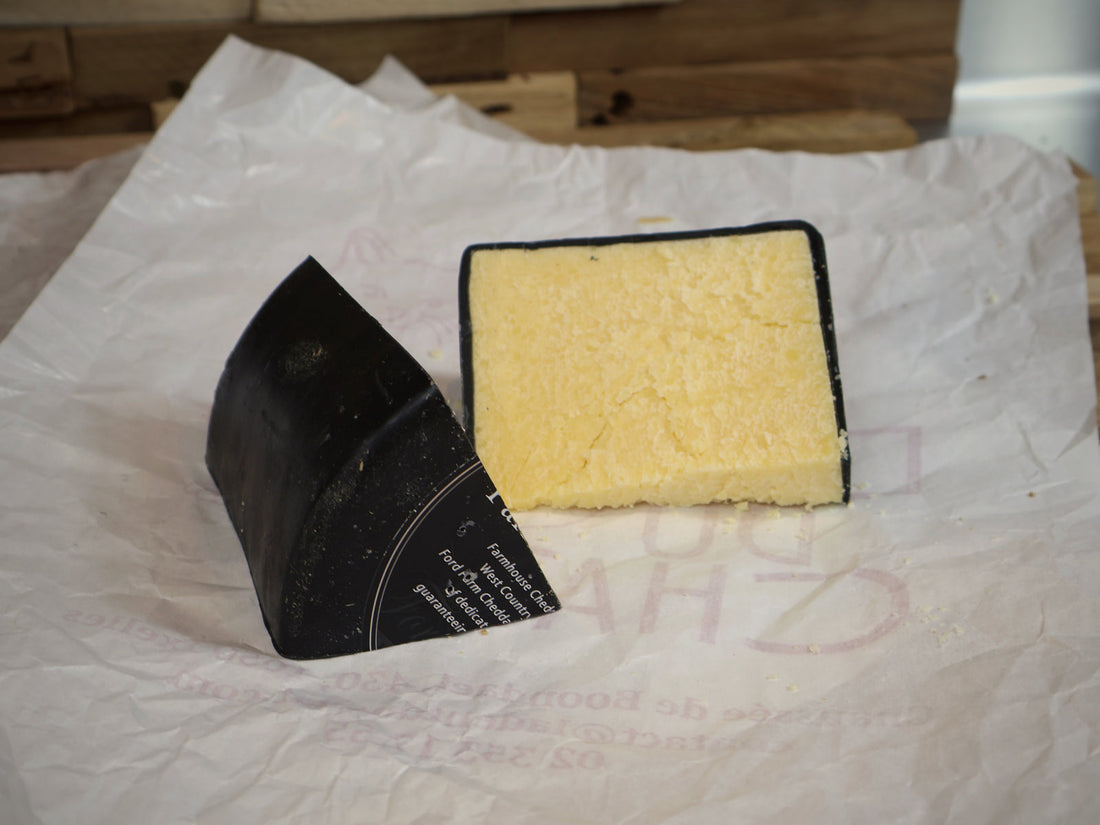
| Black Farmhouse Cheddar 9 months | Tight, slightly grainy, can turn greasy | Powerful, nutty, long finish | Burger |
| Swiss mountain raclette | Very melting, supple long stretch | Mountain milk, savoury, hazelnut | Croque and burger |
| Morbier | Runny, creamy | Milky, rustic, cellar | Croque |
| Reblochon | Flows a lot, the rind holds | Creamy, hazelnut, cellar | Croque |
| Tomme de Savoie | Moderate, a little dry | Hay, hazelnut, rustic | Croque |
| Taleggio | Runny, very creamy | Powerful, mushroom, fruity | Croque |
| Smoked scamorza | Long, elastic stretch | Gently smoky, milky | Croque and burger |
| Molenkaas 8 months | Melts well, supple | Mild caramel, butter | Croque and burger |
| Appenzeller | Even, slightly spicy | Fruity, gentle spices, savoury | Burger |
| Bleu d'Auvergne | Uneven, creamy | Powerful, penetrating, savoury | Burger, in a sauce |
| Gorgonzola | Melts into a cream | Creamy to powerful depending on maturity | Croque and burger |
In practice, two cheeses are better than one. A pressed cheese brings structure, a richer cheese brings the flow. The blend forgives a lot.
Croque-monsieur: the classic duo
A croque-monsieur loves a clean-tasting melting cheese. The duo of Comté 12-17 months and Gruyère is unbeatable. The Comté brings length and hazelnut. The Gruyère brings suppleness. Together, the melt stays even and does not turn greasy. That is the real cheese for a croque-monsieur, the one that never disappoints. For the step-by-step, follow our homemade oven-baked croque-monsieur recipe.
The béchamel is not just there for flavour. It adds the water the cheese sometimes lacks, and acts as a binder. Without it, a long-aged cheese quickly turns greasy.
Emmentaler is the mildest and most accessible option. Semi-aged gouda and Molenkaas 8 months bring a very pleasant caramel note.
For a change from the classic, four variations stand out:
- Swiss mountain raclette, for a generous stretch that spills over the edges.
- Morbier, more rustic and milky.
- Taleggio, creamy and powerful, best kept to a thin slice.
- Smoked scamorza, for a smoky note that recalls the grill.
And for a croque-madame? The egg on top changes everything. You need a cheese that holds rather than one that runs. Stick with Comté 12-17 months, Gruyère or Appenzeller, and save the runniest cheeses (Reblochon, Morbier, Taleggio) for the croque without egg.
On the charcuterie side, well-sliced herb prosciutto cotto makes all the difference. The cheese and ham should melt together, not fight for space.
Burger: the cheese that stays on the meat
A burger is a stack. The cheese has to cling to the meat, not slide off. It must melt, but stay in place.
Cheddar is the benchmark. The ideal burger cheddar is a Black Farmhouse Cheddar 9 months: clean, long on the palate, matured. But it has a flaw, and you need to know it. It melts less smoothly than an industrial cheddar. That is normal: it contains no emulsifying salts and no excess water. On scorching meat, it flows, then turns greasy.
How do you fix that? Three simple moves. Slice thin. Cover. Heat gently. The thin slice melts before it turns greasy, the lid keeps in the steam, and the gentle heat keeps the fat inside the cheese.
If you are looking for an alternative, the best burger cheese is not the most powerful, it is the most obliging:
- Swiss mountain raclette: the best option for a raclette burger, supple stretch and a taste of the mountains.
- Semi-aged gouda: clean melt, caramel note.
- Appenzeller: spicier, perfect on well-seasoned meat.
- Smoked scamorza: elastic stretch and smoky aroma.
- Bleu d'Auvergne: in a sauce, it brings power without running everywhere.
- Young gouda: very creamy, ideal for binding a blend.
One last tip: blend. A pressed cheese base for structure, a cheese with character for flavour. And for fans of fondue and gratins, our raclette and fondue collection brings together the best melting cheeses.
Mistakes to avoid
- Cheese that is too cold. Take it out twenty to thirty minutes beforehand. Otherwise the surface browns while the centre stays cold.
- Slices that are too thick. The centre does not have time to melt. Always slice thin.
- Runny cheese without support. A Reblochon or a Taleggio on its own runs and leaks. Keep the rind underneath, or blend with a cooked pressed cheese.
- Parmesan on its own. Too dry, it turns greasy instead of melting. Blend it, or use it as crisp shavings.
- Heat that is too high. Fierce heat drives out the fat. Turn it down, and let time do the work.
- Cheese with no moisture around it. A very dry cheese needs water: béchamel, a juicy filling or a tomato plays that role.
At the cheesemonger's
It all starts with the cut. At our Ixelles shops (chaussée de Boondael 430 and place du Châtelain 9) and at the Boitsfort market on Sundays, we slice according to use: thin for a croque or a burger, in shavings for Mimolette. We cut to order, never in advance. Online, write “sliced for croque” or “for burger” in the order note.
All our fresh products are shipped vacuum-packed. You are delivered in 1 to 3 days by refrigerated van, in Belgium, France and Luxembourg. Collection from the shop in Brussels is still possible.
Frequently asked questions
Which cheese for a croque-monsieur?
Comté 12-17 months and Gruyère. The first brings length on the palate, the second suppleness. For a milder croque, Emmentaler works wonders.
What is the best cheese for a burger?
A matured farmhouse cheddar, thinly sliced and covered while cooking. If you prefer a more obliging melt, Swiss mountain raclette, semi-aged gouda or Appenzeller hold their own perfectly.
What makes a cheese melt well?
The balance between water, fat, acidity and maturing. A moist cheese flows more easily. Moderate acidity dissolves just enough calcium for the protein network to slide.
Why does my cheese turn greasy?
Because its protein network no longer holds on to the fat. This is typical of long-aged cheeses and of cheese that gets too hot. Slice thinner and heat more gently.
Can you put a runny cheese in a croque-monsieur?
Yes, as long as you support it. A Morbier (uncooked pressed cheese) or a Taleggio (soft cheese) on its own runs. Mix them with a cooked pressed cheese, or keep the rind facing down to contain the melt.
Why does industrial processed cheese melt more smoothly?
It contains emulsifying salts. These additives capture the calcium and let the proteins coat the fat. The melt becomes even, but the taste remains far from a matured farmhouse cheese.
Melting cheeses, cut for you
Comté, Gruyère, farmhouse cheddar, Swiss raclette: sliced to order and delivered vacuum-packed in 1 to 3 days in Belgium, France and Luxembourg.
Useful source
- Cheese Science Toolkit — Cheese melt and stretch: the role of caseins, calcium, fat and acidity in melting.