Shop Boondael
Chaussée de Boondael 4301050 Ixelles
A stone’s throw from the Ixelles Cemetery
Directions€0,00 EUR

Farmhouse duck foie gras, artisan rillettes, traditional terrines: exceptional products from small producers, delivered vacuum-packed to Belgium, France and Luxembourg.




Your products arrive in 1 to 3 days, by refrigerated truck
We deliver to Belgium, France and Luxembourg
Terrines, foie gras and rillettes travel protected, ready to enjoy
The terrines, rillettes and foie gras: whole duck foie gras, Flanders foie gras, Beaufort terrine, wild garlic rillettes. The confits for cheese, including the fig confit with Port. The spreads and olive tapenades for the aperitif. To go with our cheeses and charcuterie.
Discover our carefully chosen selection of fine foods, bringing together exceptional products from small producers and artisan know-how. We showcase authentic gastronomic specialities, selected for their quality, their origin and their incomparable taste.
Duck foie gras, artisan rillettes, traditional terrines: our range brings together a wide variety of gourmet products, complemented by confits, Savoyard verrines, spreads and olive tapenades. Every product is selected for its authenticity and artisan craftsmanship.
Our selection showcases traditional recipes and refined artisan creations. We favour authentic products, made with quality ingredients and no compromise on taste.
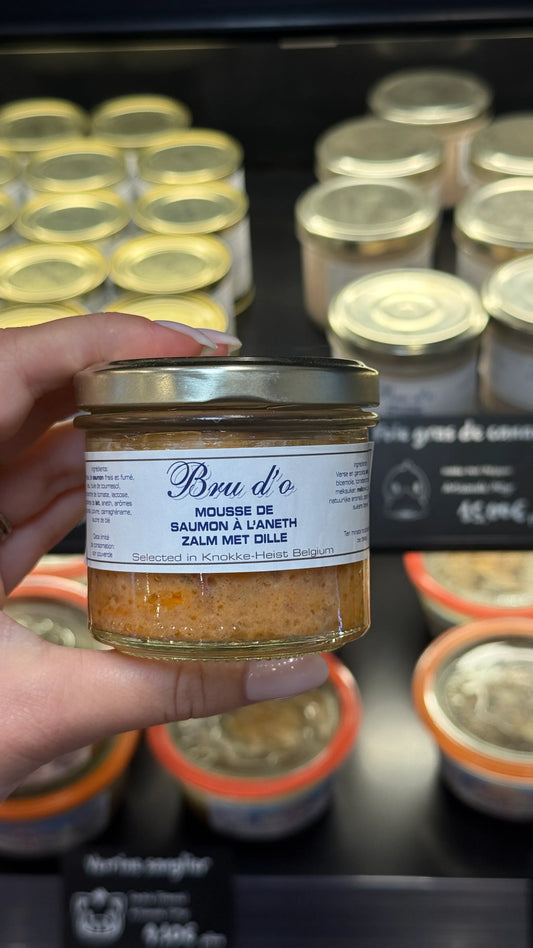
Foie gras: our whole duck foie gras and our Flanders foie gras, selected in Knokke-Heist, Belgium, by the house of Bru d'o. Keep them in the fridge and take them out 15 minutes before serving; lightly toasted brioche and a fig confit are all you need to show them at their best.
Rillettes: traditional pure pork, with wild garlic, forest-style or with Beaufort: farmhouse rillettes are spread generously on toasted country bread, as an aperitif or on a platter.
Terrines: from rabbit terrine with prunes to cep mushroom terrine, by way of Savoyard recipes with Beaufort or Génépi, they are enjoyed cool but not ice-cold, with gherkins and country bread.
Belgian fine foods online: an exclusive selection of farmhouse products, delivered quickly.
| Product | Size | Price | Who is it for? |
|---|---|---|---|
| Duck foie gras | 90 g | €15 | First discovery, a smart gift |
| Whole duck foie gras | 180 g / 300 g | €39 / €65 | Festive table, premium terrine |
| Flanders foie gras | 100 g / 200 g | €19.60 / €39.60 | Flemish terroir speciality, subtly flavoured with Port |
For a first discovery or an affordable gift, the 90 g duck foie gras at €15 is perfect: a generous size for two people, with no commitment. For a festive meal that impresses, the whole terrine, 180 g or 300 g (€39 or €65) is the obvious choice — the centrepiece you place in the middle of the table. Looking for a regional speciality from the North? Flanders foie gras, subtly flavoured with Port, is our gourmet nod to the Flemish terroir.
The duck foie gras (90 g) is our introduction: accessible, generous, ideal for getting to know the product. The whole duck foie gras is made from whole lobes — the noblest designation under the French decree of 13 December 1991, which guarantees 100% foie gras with no pressed-together pieces. The Flanders foie gras stands out for its roots in the culinary tradition of the North: subtly flavoured with Port, with a mild yet distinctive aromatic profile.
Three designations, three different realities. Whole foie gras (foie gras entier) contains only seasoned whole lobes — the purest product. Foie gras (without the word "entier") is made of pieces of lobe pressed together, still 100% foie gras but with a different texture. Foie gras mousse contains at least 50% foie gras blended with a fine forcemeat — lighter on the palate, less concentrated in flavour. Our products are clearly labelled so that you know exactly what you are buying.
Keep your foie gras in the fridge until the date shown on the packaging. Before serving, take it out 15 minutes in advance so that it regains its suppleness and releases its aromas. Slice it with a thin blade run under hot water, and serve it on toasted bread — brioche or country bread — with a fig or onion jam. A glass of Sauternes or Monbazillac works wonders; for the Flanders foie gras, its Port flavouring also calls for a chilled Port as a pairing.
It is Belgian. Our foies gras are selected and made in Knokke-Heist, Belgium, by the house of Bru d'o. The recipe is disarmingly honest, with no artifice or superfluous ingredients. No Franco-French storytelling: it is a Belgian product, chosen with care, that speaks through its quality. The full list of ingredients appears on the packaging.
For a gift that makes an impression, go for the 300 g whole terrine at €65 — it dresses a beautiful Christmas or New Year table effortlessly. For a lighter size or a tighter budget, the 200 g Flanders foie gras at €39.60, subtly flavoured with Port, is an original idea. And to slip into a gourmet hamper, the 90 g at €15 remains the safe bet.
Whether you want to put together a gourmet aperitif, elevate a meal or offer a refined gift, our selection suits every wish. Four criteria guide a good choice: origin (favour farmhouse products and short supply chains), know-how (traditional recipes, slow cooking), freshness (our products travel vacuum-packed in a refrigerated truck) and the match with the moment — a verrine for the aperitif, a terrine as a starter, a foie gras for special occasions. Artisan fine foods vs. general grocery: the difference lies in traceability and authenticity.
And to put together a complete platter, pair these treasures with our artisan cheeses and our fine charcuterie.
Artisan farmhouse rillettes: a Belgian and French culinary tradition with endless variations. Here: pure pork, with wild garlic, forest-style with mushrooms or with Beaufort. Enjoy them on toasted country bread or crackers, as an aperitif, or as part of a platter with our fine charcuterie. A crunchy gherkin and a glass of dry white complete the pairing.
Artisan terrines: a fine food classic, more accessible than foie gras. Keep them in the fridge and serve them cool but not ice-cold (taken out 15–20 minutes beforehand), in generous slices with country bread and condiments. The difference from foie gras? A terrine is a composed preparation (meats, herbs and spices, sometimes cheese, like our Beaufort terrine), with a rustic texture; foie gras is a single noble product with a melting texture. The two complement each other perfectly on a festive table.
A general grocery relies on volume, low prices and often industrial products. Artisan fine foods are the opposite: small batches, identified producers, traditional recipes and full traceability. At La Dent du Chat, every terrine, every foie gras, every rillette has been tasted and chosen by our team, then shipped vacuum-packed in a refrigerated truck to Belgium and France. Artisan fine foods online: an authentic alternative to the supermarket.
Foie gras, terrines, rillettes... and to go with them, our aged cheeses and our fine charcuterie.
Artisan cheeses Fine charcuterie